Blog

What Is Traceability in Manufacturing? Why It Matters for Compliance and Operations

March 16, 2026

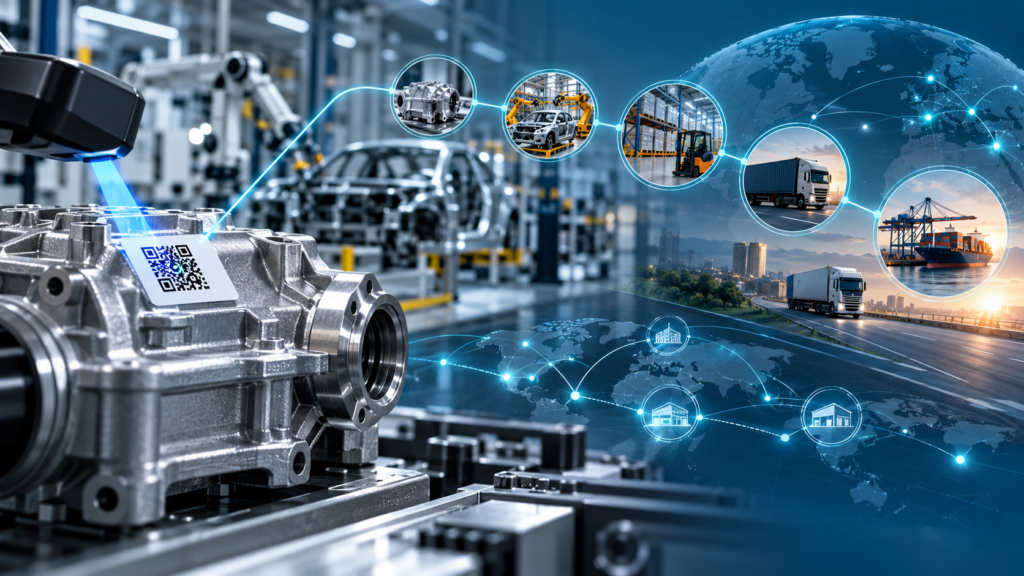
Traceability in manufacturing is the ability to track and document the history, location, and movement of products and components throughout the production process. As a result, organizations can maintain compliance, improve quality control, and gain better visibility into their operation.

traceability workflow in manufacturing
Even vehicles that appear identical can have different VIN data, which can impact regulatory labeling and compliance requirements.

Introduction

In modern manufacturing environments, the ability to accurately identify and track products is essential. From raw materials to finished goods, organizations rely on traceability systems to understand where products come from, how they move through production, and where they ultimately end up.

In industries such as automotive, healthcare, and government, traceability is especially important. These industries often operate under strict regulatory requirements and depend on accurate data to ensure compliance and product integrity.

Therefore, understanding how traceability works can help organizations improve efficiency, reduce risk, and maintain confidence in their manufacturing processes.

What Is Traceability?

Traceability refers to the ability to track the history, movement, and location of products, components, or materials throughout a manufacturing process or supply chain.

In manufacturing environments, this often includes tracking:

• part numbers
• serial numbers
• VIN numbers
• batch or lot numbers
• production data
• labeling information

Together, this information creates a detailed record of how a product was produced and what components were used.

For example, in the automotive industry, traceability systems allow manufacturers to follow a vehicle from the moment it enters production until it leaves the facility. Consequently, teams can quickly access important data about the vehicle if questions or issues arise later.

Why Traceability Is Important

Traceability provides several important benefits for manufacturers and regulated industries. In particular, it supports compliance, quality control, and operational visibility.

importance of traceability in manufacturing
Traceability helps manufacturers maintain compliance, improve quality control, and gain better visibility into their operations.

Compliance and Regulatory Requirements

First and foremost, many industries require organizations to maintain accurate identification and documentation for products.

For example:

• automotive manufacturers must track VIN numbers and vehicle data
• medical device companies must comply with UDI labeling requirements
• government organizations must track assets and equipment

As a result, traceability systems help organizations maintain the documentation required to meet these regulations. In addition, they help teams respond quickly to audits, inspections, or regulatory reviews.

Quality Control

Traceability also plays a critical role in quality control.

If a defect or issue is discovered, traceability data allows manufacturers to identify the source of the problem quickly.

For instance, teams can determine:

• when a component was produced
• which products used that component
• where those products were distributed

Consequently, organizations can respond faster, reduce risk, and limit the impact of potential product recalls.

Operational Visibility

In addition to compliance and quality control, traceability improves operational visibility.

Modern manufacturing systems generate a large amount of data. However, without proper identification and tracking systems, that data can become difficult to connect to real-world processes.

Traceability helps bridge this gap. By linking products, labels, and production data together, organizations gain a clearer view of how their operations are performing.

How Traceability Works in Manufacturing

Traceability typically relies on a combination of identification systems, labeling technologies, and data tracking processes.

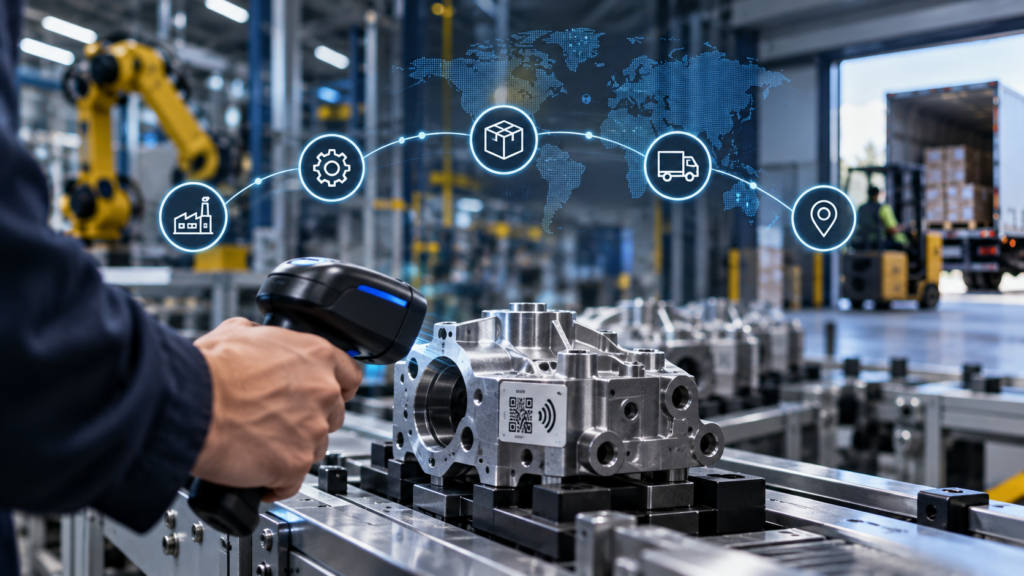
A simplified traceability workflow may look like this:

traceability workflow in manufacturing
Traceability systems track products and components throughout the manufacturing process by connecting identification systems, labeling, and production data.

Traceability in the Automotive Industry

In automotive manufacturing, traceability is essential for tracking vehicles, components, and compliance information.

One of the most well-known examples of traceability is the Vehicle Identification Number (VIN).

VIN numbers allow manufacturers to track important information about each vehicle, including:

• where the vehicle was produced
• vehicle specifications
• production details
• regulatory information

For a deeper look at how VIN numbers work, you can explore our guide on what a VIN number is and how it’s created.

Supporting Traceability with Identification Systems

Effective traceability depends on reliable identification systems.

These systems may include:

• compliance labels
• VIN plates
• barcodes or QR codes
• RFID technology
• serialized identification systems

When these identification methods are implemented correctly, they help ensure that products and their associated data remain connected throughout the manufacturing process.

At Ancor, helping organizations strengthen these identification and traceability processes is a key part of what we do. By connecting labeling, compliance, and operational data, companies can improve accuracy, visibility, and confidence in their production systems.

identification systems supporting traceability
Identification systems such as VIN plates, barcodes, and serialized labels play a critical role in supporting traceability across manufacturing and supply chain operations.

The Future of Traceability

As manufacturing becomes more connected and data-driven, traceability will continue to grow in importance.

Manufacturers are increasingly looking for ways to improve visibility across their operations while maintaining compliance with evolving regulatory requirements.

Therefore, organizations that invest in strong traceability systems today will be better prepared to adapt to the challenges of tomorrow.

FAQs

What is traceability in manufacturing?

Traceability in manufacturing refers to the ability to track the history, movement, and location of products or components throughout the production process. By assigning unique identifiers such as serial numbers, VIN numbers, or barcodes, manufacturers can maintain accurate records and improve visibility across their operations.


Why is traceability important in manufacturing?

Traceability helps manufacturers maintain regulatory compliance, improve quality control, and quickly identify the source of potential issues. As a result, organizations can reduce risk, respond faster to recalls, and maintain greater confidence in their production processes.

How do manufacturers track products through production?

Manufacturers typically track products by assigning a unique identifier such as a VIN number, barcode, or serial number. This identifier is then connected to production data within manufacturing systems, allowing teams to monitor the product as it moves through different stages of production and distribution.

Final Thoughts

Traceability is a foundational component of modern manufacturing. By tracking products, components, and data throughout the production process, organizations can improve quality control, maintain regulatory compliance, and gain greater operational visibility.

Ultimately, effective traceability helps organizations operate with greater confidence and accountability—two qualities that are essential in today’s complex manufacturing environments.

Introducing TraceCor from Ancor

TraceCor is Ancor’s smart label asset tracking and traceability platform built for on-demand inventory management. 

Let us show you how Ancor can bring clarity and control to your traceability needs.  Download our TraceCor flyer or learn more by visiting the Traceability page on our website.

ABOUT ANCOR

Technology Solutions That Dare, Disrupt and Deliver

Smart connectivity, data solutions and digital transformation to help industries evolve and lead.

Ancor is a technology company that builds software systems to digitally represent and manage real-world assets and compliance. Our divisions specialize in label digital twins, real-time asset visibility across warehouses and supply chains, battery management systems and innovation where we design and build new platforms that solve complex customer challenges. 

To learn more about Ancor, visit our website at www.weareancor.com.

Share post

Recent Posts

Blog

Explore More Insights

Dive into our latest articles and updates.